.png)
Muun Health, the Estonian femtech company developing a minimally invasive wearable biosensor for hormone monitoring, has been awarded a €700,000 grant from Enterprise Estonia to accelerate a critical stage of its sensor development.
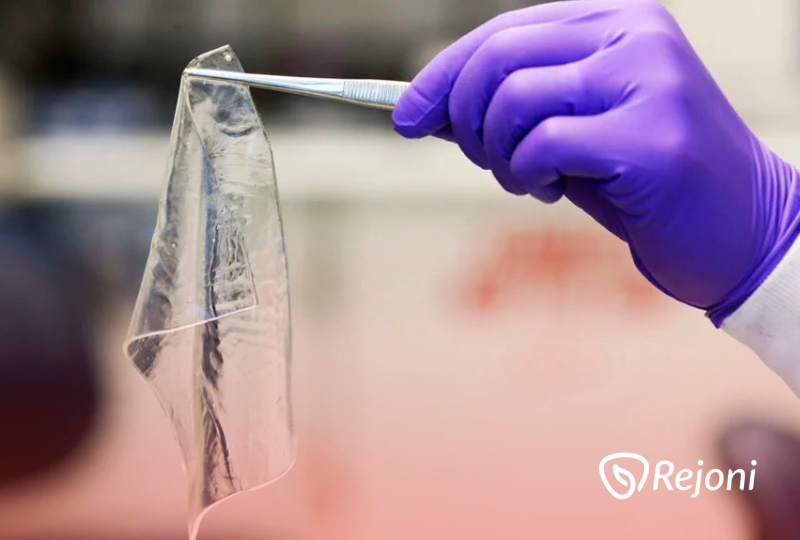
The funding will be directed towards advancing the bioselective layer of Muun Health's Smart Patch Platform — the component responsible for identifying target hormones within a complex biological environment. Getting this right is foundational to everything else the device needs to do.
From lab to integrated system
Muun Health has already demonstrated its core sensing principle at laboratory level. The company is now moving from individual technical components towards a more integrated sensor system, and this grant supports the most technically demanding part of that transition.
The bioselective layer project will focus on improving the sensor's performance, robustness and manufacturability, while generating the evidence base needed to progress towards an integrated prototype and, eventually, clinical validation.
Crucially, the funding is non-dilutive, allowing the company to complete this stage of development without compromising ownership or long-term strategic direction.
What this means in practice
For the end user, the bioselective layer is largely invisible. But its performance determines whether the device can deliver hormone data that is accurate, consistent and clinically meaningful over time.
Current hormone monitoring relies on blood tests or indirect estimates, both of which offer only occasional snapshots. Muun Health's goal is to provide continuous measurement from interstitial fluid, giving women and their clinicians access to hormonal data that reflects how the body actually changes day to day.
Advancing the bioselective layer is what makes that possible. It enables the sensor to distinguish the intended hormone from other substances naturally present in the body, which is the difference between a device that works under controlled laboratory conditions and one that functions reliably as a wearable.
As Kerli Luks, Founder of Muun Health, puts it:
"We measure steps, sleep and glucose continuously, yet some of the most important signals in women's health are still captured through occasional snapshots. This funding allows us to tackle one of the hardest scientific challenges behind continuous hormone monitoring and move closer to giving women and their clinicians access to a much clearer picture of hormonal change over time."
What comes next
Over the next few years, Muun Health will focus on integrating the bioselective layer with the wider sensing system and evaluating performance under biological conditions. In parallel, the team will be building out the clinical and regulatory pathway, including the studies needed to compare sensor measurements with established laboratory methods.
The company is clear that progress will be evidence-led rather than driven by arbitrary timelines. The immediate objective is to demonstrate that the integrated platform can generate reliable and repeatable hormone measurements before moving into broader clinical validation.
The €700k grant forms part of a €1 million project overall, with Enterprise Estonia continuing its support of Muun Health's mission to close the data gap in female health.